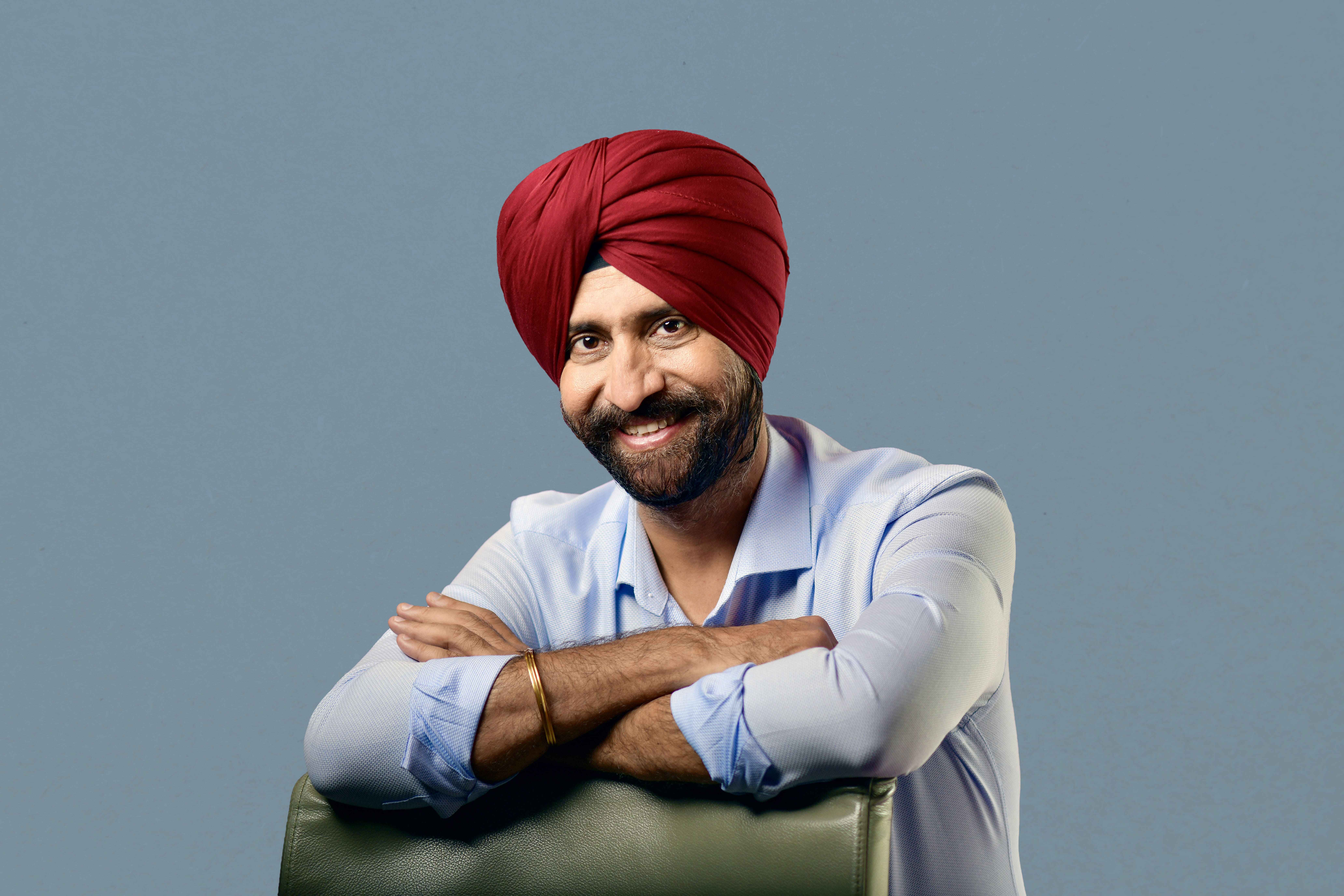



Mr. Chandan Sharma, General Manager- Digital Media, Adani Group
AI is changing the way we work and manage workflows in marketing. The brands that understand this shift are leading the high-velocity, mobile-first market of India.
The marketing fraternity is still cautious about implementing AI workflows. The reason, of course, is the pressure of going from a definite performance to the unknown of AI.
More than 98% of executives agree that they need to implement AI in their organization’s strategies sooner rather than later, and 85% also agree that without scaling AI, they won’t be able to meet their growth objectives.
While it is exciting to discuss possible implementations, in real-world case studies, there isn’t much to show, especially regarding results and outcomes. We are yet to embrace the agentic and multi-agentic processes in our traditional workflows.
However, as I mentioned, some brands are pioneering the redesign of the loop. We are here to talk about modern workflows that have been developed and are delivering results.
Content: from “publishing” to predictive production
Simply converting inputs into content was always problematic. The communication got lost in transmission, and the outputs were not 100% aligned with expectations. We are now trying to move away from working like a “brief-to-post” assembly line toward a productive, efficient workflow.
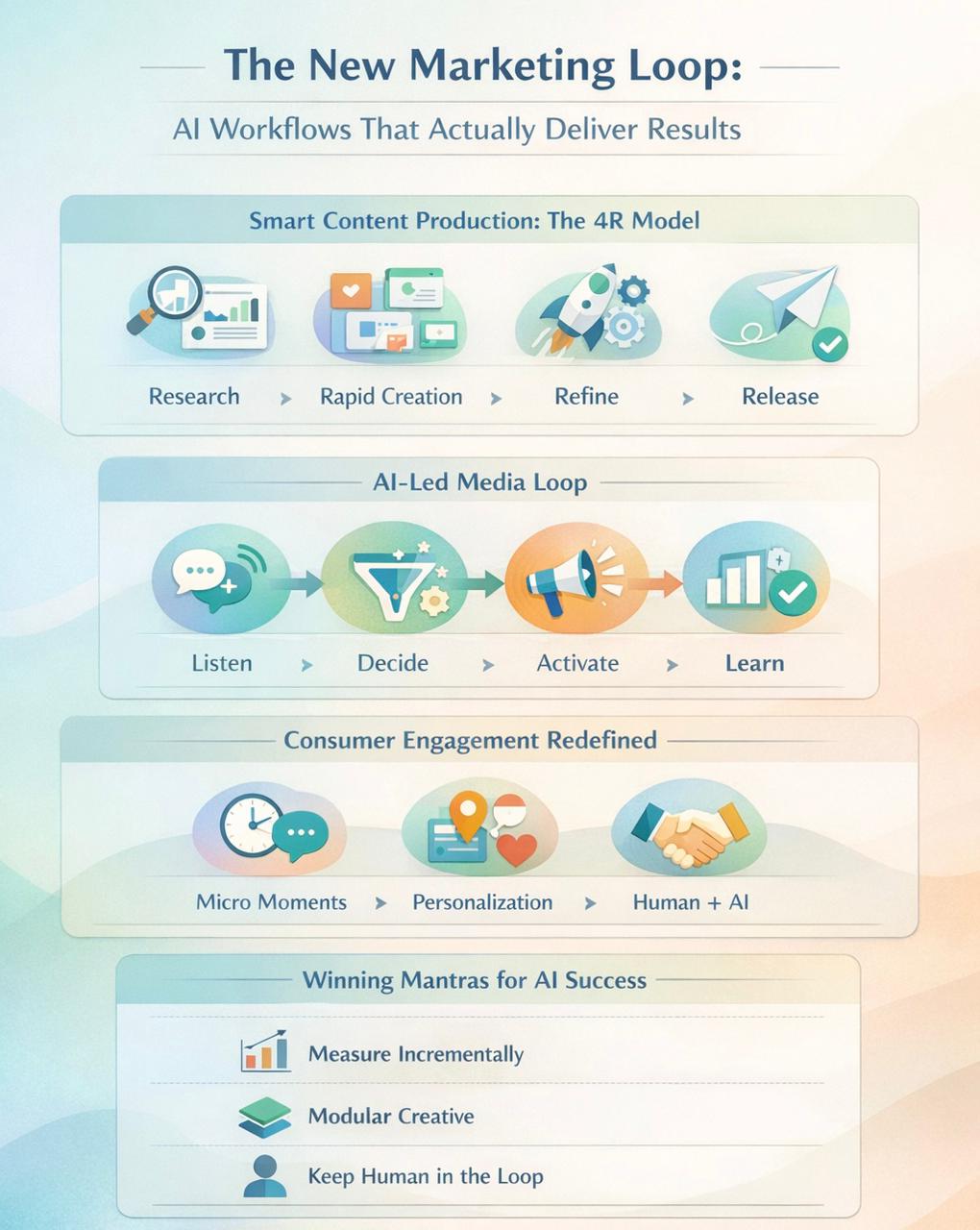
A practical model I follow and is far more effective than the traditional methods is the 4R model.
- Research (audience insight, feedback, directions given by leadership)
- Rapid creation (different versions, depending on platform/persona)
- Refine (the human touch, edit of tone, and the imperative brand safety)
- Release
Brands like Unilever and Coca-Cola are already using it effectively.
The media workflow: from audiences to moments
We all know that the traditional planning starts with broad audience personas and goes to funnels. I am not saying it’s not working or that it’s bad; we have something better and more efficient. AI-led planning starts with intent signals—search behavior, content consumption, store-level demand, weather, location clusters, and even creative fatigue. I cannot say whether this will be the final workflow for another decade, but it’s the best I have seen so far.
AI-led planning starts with intent signals—search behavior, content consumption, store-level demand, weather, location clusters, and even creative fatigue.
- Listen: Observe what the internet is talking about you, or your product, understand what people are engaging with, and identify the perfect timing. Unify data (site, app, social, retail, CRM)
- Decide: Create a framework (propensity/next-best-action models) to filter out bad or slow strategies based on the intel you got from listening.
- Activate: Activate the channels that you filtered out and start your program.
- Learn: Gather analytics and use them to make your own set of rules and success stories.
- Repeat
AI now helps generate, test, and rotate variations faster than any manual team can. It is compelling the media teams to become more of a portfolio manager than the actual implementor. The Brands that understand this can do well in the market with a fast pace, and they have made three simple Mantras: measure incrementally (not just ROAS), modular creative making, so that AI can tweak it without breaking the brand, and the most crucial is keeping the human in the loop to check for meaning, nuance, and risk.
What’s changing in consumer engagement
Consumer engagement is the part where everything culminates: how the consumer interacts with you or your product. If the consumer is not acting or reacting appropriately, then all the workflows and frameworks mean nothing.
The world has changed rapidly, and continuous stimulation is required to keep the brand alive in consumers’ memories (recall value). I am not against big campaigns that spend crores, but true results come from capturing micro moments, which is only possible with always-on campaigns. We understand that today, the attention is fragmented, expectations are instant, and loyalty is hard to earn.
Sephora blended AI-driven recommendations with human beauty advisors, proving “automation + human trust” is the winning combo.
Consumer engagement is about their browsing patterns, content consumption, location context, and customer service cues, which enable messages that feel timely rather than creepy. Thanks to the operating frameworks of AI, we can now address consumers’ actual needs, which are super personalized and not forced.
AI workflows are not changing the fundamentals of marketing, but are only showing a new way to acknowledge them. The most important of all the fundamentals is trust, which is not built by shouting louder or automating more; it is achieved by carefully helping the consumer at every touchpoint.